
Pallet Wrapping & Fabric Roll Stretch Wrapping Machine
Project Overview
The Shah Cement Industries Ltd. Wrapping Machine Project involved the supply and installation of two dedicated MACHLION industrial wrapping machines for two different wrapping applications: pallet wrapping and fabric roll stretch wrapping. Instead of using one machine for both requirements, the project includes a separate machine configuration for each type of load, with its own capacity, working dimensions, and operating parameters.
The project consists of:
- 1 Set – MACHLION M Type Pallet Wrapping Machine
- 1 Set – MACHLION Fabric Roll Stretch Wrapping Machine
- Model: ST-SWM-1500
The commercial documents confirm one unit of each machine, making 2 sets in total for Shah Cement Industries Ltd.
MACHLION M Type Pallet Wrapping Machine
The pallet wrapping machine is configured for palletized loads and provides a maximum wrapping height of 2,000 mm. The machine uses a 1,500 mm diameter turntable with a maximum turntable weight capacity of 1,000 kg.
Its main confirmed specifications include:
- Maximum Wrapping Height: 2,000 mm
- Turntable Diameter: 1,500 mm
- Turntable Weight Capacity: 1,000 kg
- Turntable Height: 85 mm
- Power: 1.2 kW
- Power Supply: Three Phase, 380V, 50Hz
- Reference Machine Dimension: 250 × 180 × 280 cm
This machine forms the pallet-wrapping part of the project and is intended for wrapping palletized loads within the confirmed operating limits of the supplied unit.
MACHLION Fabric Roll Stretch Wrapping Machine
The second machine was supplied specifically for fabric roll stretch wrapping. Its configuration is different from the pallet wrapping machine and is designed around the dimensions and weight of fabric rolls.
The confirmed technical specifications are:
- Maximum Fabric Roll Diameter: 1,500 mm
- Maximum Fabric Roll Length: 1,500 mm
- Maximum Fabric Roll Weight: 1,500 kg
- Turntable Height: 500 mm
- Inner Paper Tube Diameter: 100 mm
- Power Supply: Three Phase, 380V, 50Hz
- Packing Speed: 20–40 rolls/hour
- Turntable Speed: 0–12 rpm
- Reference Machine Dimension: 290 × 200 × 280 cm
The important distinction in this project is that the two machines do not have the same load capacity. The pallet wrapping machine is rated for 1,000 kg, while the fabric roll stretch wrapping machine is rated for 1,500 kg. These specifications are presented separately so customers can clearly understand the actual configuration of each machine.
Technical Configuration
The technical documentation also specifies the main electrical components used in the machines, including Thinget PLC and inverter, Omron photoelectric and approach switches, Schneider AC connector, urgent stop and process switch, Phoenix connection end, TY reduction gearbox, and CPG motor with reduction gearbox and DC motor.
Real Project Installation
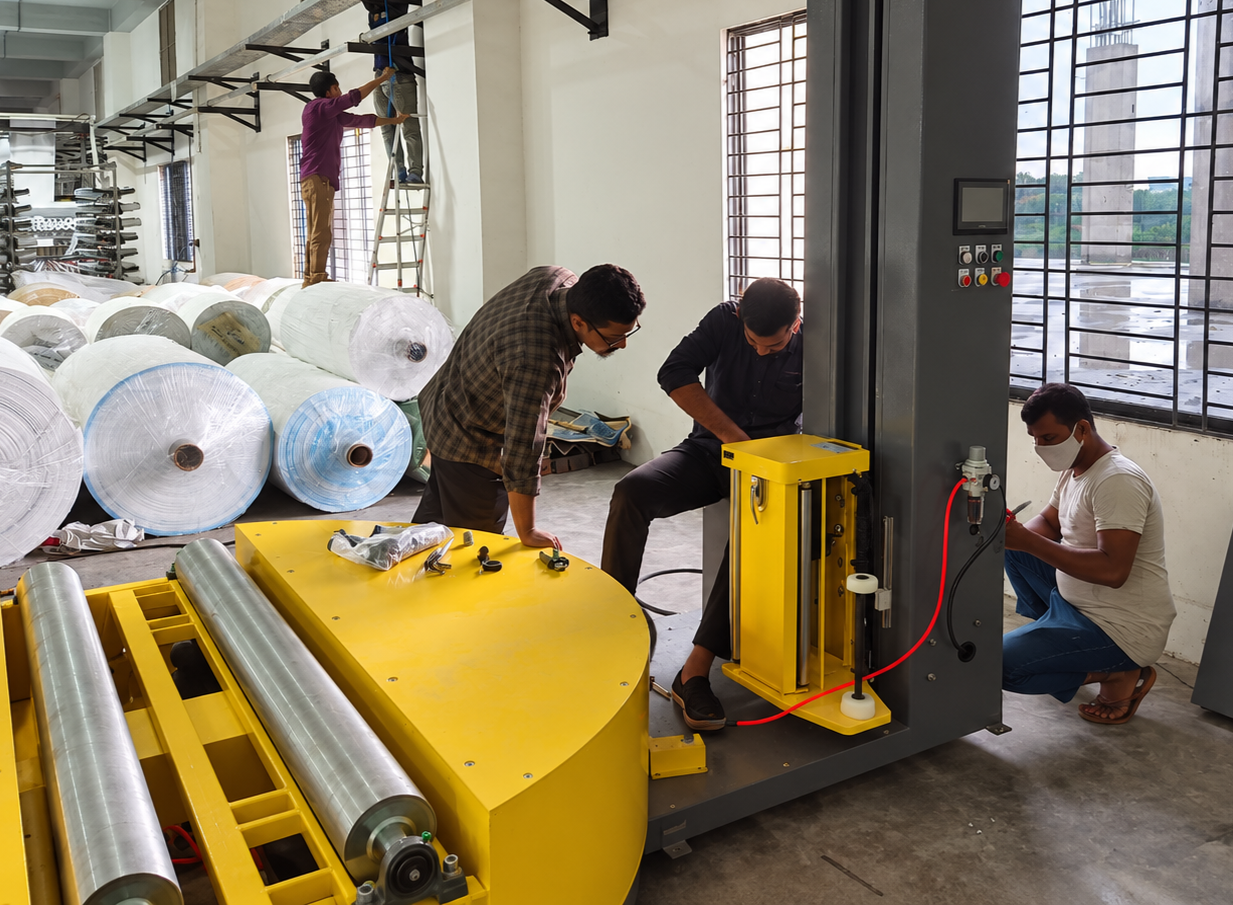
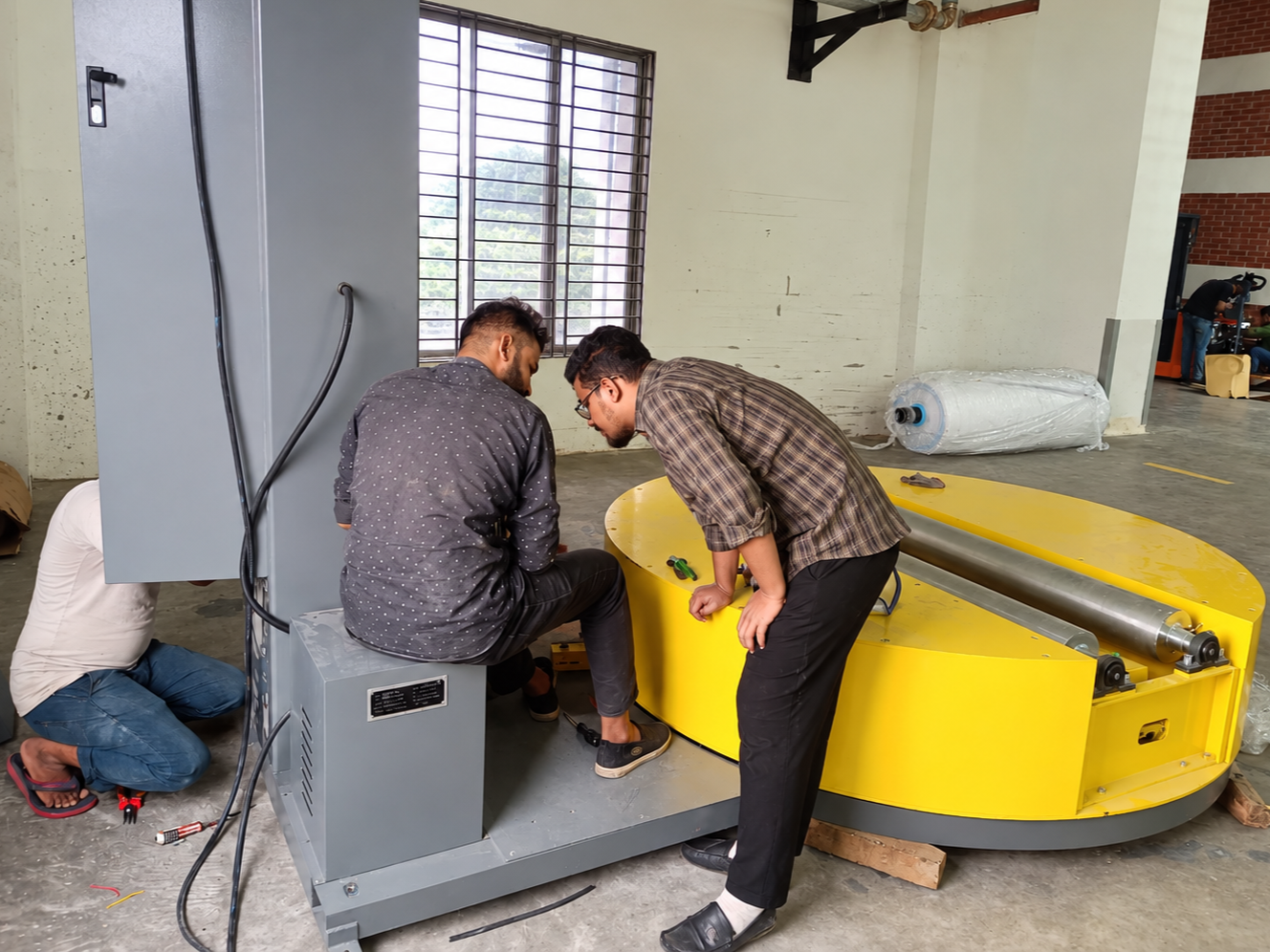
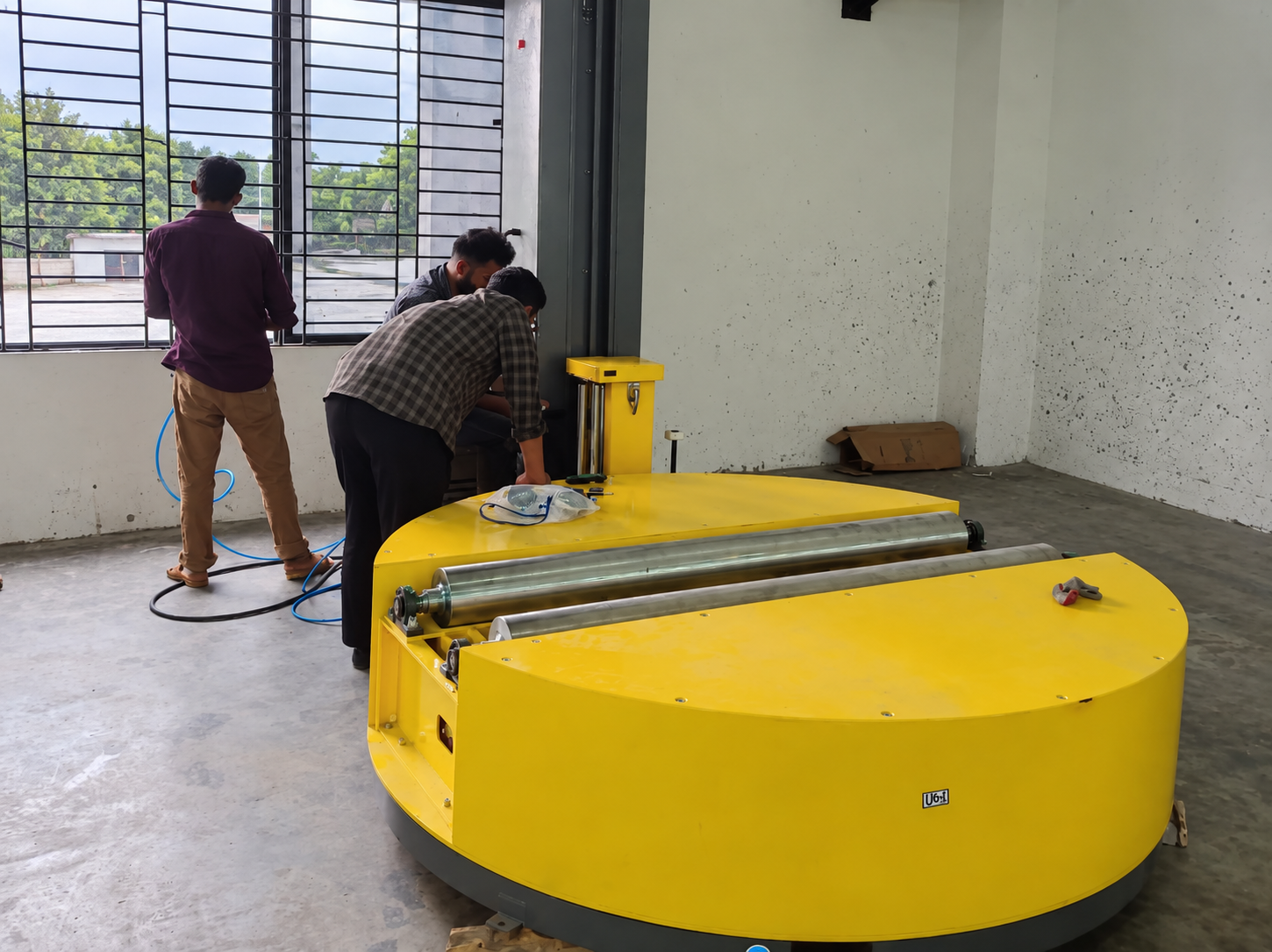
The project photographs document the machines during actual installation and technical work at the customer facility. The images show the equipment, installation activities, technicians, fabric rolls, and the real working environment, providing a more transparent view of the project than catalogue images alone.
For companies looking for a pallet wrapping machine in Bangladesh, fabric roll stretch wrapping machine, industrial stretch wrapping machine, or wrapping machine for factory applications, this Shah Cement project provides a real reference of two separate wrapping solutions installed for two different load types.
The project highlights a simple but important approach: use the correct wrapping machine for the actual product and load requirement. For Shah Cement Industries Ltd., that meant one dedicated pallet wrapping machine and one dedicated fabric roll stretch wrapping machine, each supplied according to its confirmed technical specifications.
Project Gallery
What We Solved
For Shah Cement Industries Ltd., the requirement was not simply “a wrapping machine.” There were two different wrapping applications inside the same project: one for palletized loads and another for fabric rolls.
These two products are very different in shape and handling. A palletized load is placed on a flat turntable and wrapped around its height, while a fabric roll is cylindrical and needs a machine designed around roll diameter, roll length and roll weight. For that reason, the project was arranged with two dedicated MACHLION wrapping machines, each serving a clearly defined application.
That application-specific approach is the main value of the solution.
The Right Machine for Each Type of Load
Instead of trying to handle pallets and fabric rolls through one general wrapping setup, the project separates the two processes.
The MACHLION M Type Pallet Wrapping Machine handles palletized loads, while the MACHLION Fabric Roll Stretch Wrapping Machine is dedicated to roll-shaped products.
This makes the purpose of each machine clear from the beginning:
- Palletized load → Pallet Wrapping Machine
- Fabric roll → Fabric Roll Stretch Wrapping Machine
For an industrial operation, this is a much more practical way to organize wrapping. Each machine has its own working range, and the operator can use the equipment intended for that specific type of product.
For customers looking for a pallet wrapping machine in Bangladesh, fabric roll wrapping machine, or industrial stretch wrapping solution, this project shows an important principle: select the machine around the product, not simply around the word “wrapping.”
A Dedicated Pallet Wrapping Process
For palletized loads, the project uses the MACHLION M Type Pallet Wrapping Machine.
The machine is configured for a maximum wrapping height of 2,000 mm and a turntable weight capacity of 1,000 kg.
The real benefit here is the dedicated process.
Palletized products now have a defined machine for wrapping, with clear operating limits. Instead of treating pallet wrapping as part of a general packaging activity, it becomes a specific operation with equipment selected for pallet-type loads.
That is especially relevant for factories and warehouses where palletized materials regularly move through production, storage or dispatch areas.
For someone searching for an industrial pallet wrapping machine, pallet stretch wrapper, or pallet wrapping solution for factory use, the Shah Cement installation gives a real project reference rather than only a catalogue example.
Fabric Rolls Needed a Different Approach
The fabric roll application required a different machine altogether.
The MACHLION Fabric Roll Stretch Wrapping Machine is configured around the shape and size of rolls. It can accommodate fabric rolls up to 1,500 mm in diameter, 1,500 mm in length and 1,500 kg in weight. Its stated packing speed is 20–40 rolls per hour.
This is important because fabric rolls are not simply another version of a pallet load.
Their cylindrical shape changes how they sit on the machine and how the wrapping process needs to be arranged. Giving fabric rolls their own dedicated machine keeps this application separate from pallet wrapping and gives the operation a clearly defined working range.
For businesses handling textiles, fabric rolls or other roll-shaped materials, this is the more relevant part of the project.
It also makes this project useful for customers searching for a fabric roll stretch wrapping machine in Bangladesh, fabric roll packing machine, roll wrapping machine, or industrial roll packaging solution.
Clear Working Limits Instead of General Claims
One thing we wanted to keep clear in this project is the actual operating range of each machine.
The pallet wrapping machine and the fabric roll wrapping machine are not identical machines with different names. They have different applications and different load limits.
The pallet wrapping machine has a 1,000 kg turntable capacity, while the fabric roll wrapping machine is designed for rolls up to 1,500 kg.
That distinction matters when customers evaluate wrapping equipment.
A machine should not be selected only because it is called a “stretch wrapper.” The customer also needs to consider:
- the type of product,
- the shape of the load,
- the load dimensions,
- the load weight,
- and the machine’s operating range.
This project keeps those requirements separate and easy to understand.
A Defined Wrapping Capacity for Fabric Rolls
The Fabric Roll Stretch Wrapping Machine has a specified packing speed of 20–40 rolls per hour.
That gives the customer a real technical reference for the machine’s working capability.
We are not converting that figure into daily output or claiming a percentage increase in productivity, because that would depend on actual operating conditions. But the stated packing speed itself is useful when comparing machines or planning a fabric-roll wrapping process.
This is much more meaningful than using general marketing terms such as “fast” or “high-performance.”
For an industrial buyer, a clear operating figure makes it easier to understand what the machine is designed to do.
Bringing More Structure to the Wrapping Area
With two dedicated machines, the overall wrapping arrangement becomes easier to define.
The workflow is straightforward:
Palletized products go to the pallet wrapping machine.
Fabric rolls go to the fabric roll wrapping machine.
There is no need to treat two very different load types as one application.
This gives the project a clear structure and allows each machine to be operated within its own confirmed limits.
For a factory handling more than one type of product, that separation is valuable because the wrapping process can be organized according to the actual load rather than relying on one general machine for everything.
Industrial Components Behind the Machines
The machines also use specified industrial control and electrical components.
The technical configuration includes Thinget PLC and inverter, Omron photoelectric and approach switches, Schneider electrical components, Phoenix connection end, TY reduction gearbox and CPG motor-related components.
For technical teams, this provides useful information beyond the machine’s basic wrapping capacity.
The project therefore combines the visible mechanical wrapping system with a documented control and electrical configuration.
We do not need to overload the Customer Experience page with every component detail, but these specifications are useful for customers who want a deeper technical understanding of the equipment.
A Real Industrial Installation
The project images show the equipment inside the actual industrial environment during installation and technical work. The machines, technicians, tools, fabric rolls and surrounding facility are visible.
For an industrial customer, this kind of project reference is valuable because it shows more than a clean product image.
It helps visitors understand:
- the actual physical scale of the machines,
- how the equipment looks inside a working factory,
- how the machines are positioned during installation,
- and what a real wrapping-machine project looks like on site.
This is particularly useful for customers researching an industrial wrapping machine supplier in Bangladesh and wanting to see completed or ongoing project references before discussing their own requirement.
What Makes This Project Different
The strongest point of the Shah Cement wrapping project is the dedicated-machine approach.
Instead of supplying one general wrapping machine and expecting it to handle different products, the project uses separate machines for separate applications.
That gives the project several clear strengths:
- Dedicated pallet wrapping
- Dedicated fabric roll wrapping
- Different machine capacities for different load types
- Defined working limits for each machine
- A stated packing-speed range for fabric rolls
- Industrial electrical and control components
- Real project installation inside the customer facility
The value is not in making the system more complicated.
It is actually the opposite: each machine has one clear job.
Why This Matters for Bangladeshi Industries
Factories in Bangladesh often handle several types of products within one facility. Palletized goods, rolls, cartons, raw materials and finished products may all require different handling or packaging arrangements.
When a company starts looking for a stretch wrapping machine in Bangladesh, the first question should therefore not simply be:
“Which wrapping machine should we buy?”
A better question is:
“What exactly do we need to wrap?”
If the product is palletized, the machine needs to suit the pallet load.
If the product is a fabric roll, then roll diameter, roll length, weight and required wrapping capacity become important.
The Shah Cement project follows exactly that product-focused approach.
The Solution in Simple Terms
This project created two dedicated wrapping processes for two different industrial load types.
The pallet wrapping machine handles palletized loads within its defined working range.
The fabric roll stretch wrapping machine handles cylindrical fabric rolls within its specified size and weight range and has a stated packing capacity of 20–40 rolls per hour.
So the solution is not simply “two wrapping machines.”
It is a more focused setup:
one machine for pallets, one machine for fabric rolls, and each machine selected around the actual product it needs to handle.
For customers looking for a pallet wrapping machine in Bangladesh, fabric roll wrapping machine, industrial stretch wrapping machine, pallet stretch wrapper, fabric roll packing machine, industrial packaging machine, or factory wrapping solution, the Shah Cement Industries Ltd. project provides a real reference of how two different wrapping requirements can be handled through two dedicated MACHLION machines.